


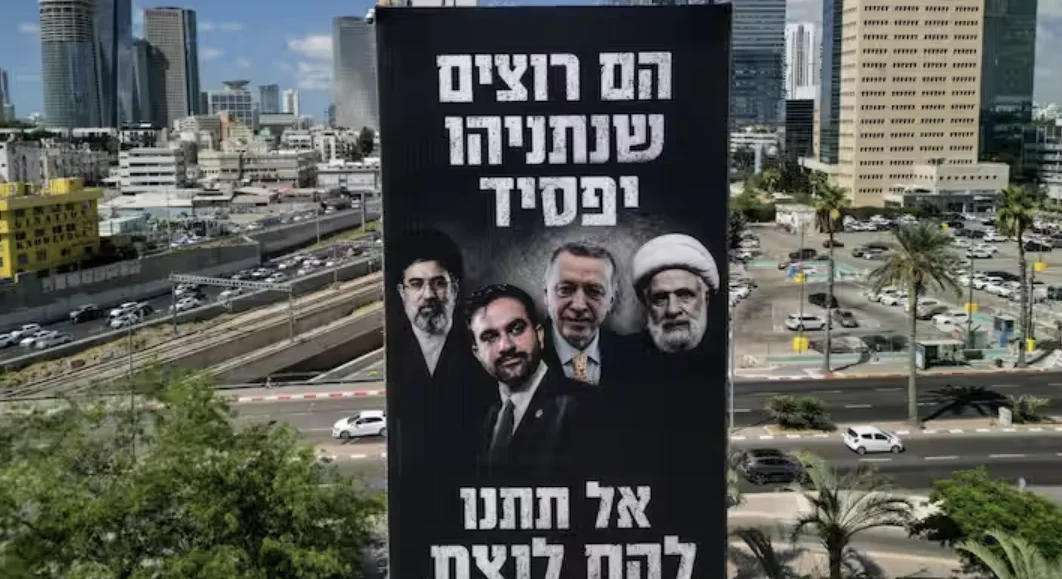
Israeli Prime Minister Benjamin Netanyahu has been increasingly vocal about two very different political figures: Turkish President Recep Tayyip Erdogan and New York City Mayor Zohran Mamdani.
At first glance, the two men have little in common. Erdogan is a regional leader whose government has a significant military and diplomatic footprint, while Mamdani is a city mayor whose influence is largely domestic. Yet both have become politically relevant to Israel for different reasons.
Turkey is the more immediate regional concern. Under Erdogan, Ankara has sharply criticised Israel's actions in Gaza and has sought a larger role in the Middle East. Israeli officials are particularly watching Turkey's growing involvement in Syria, where competing security interests could bring the two countries into greater friction.
Netanyahu has previously expressed concern about Erdogan's ambitions in the region. He has accused the Turkish leader of seeking to expand Turkish influence and has also objected to the possibility of Washington approving the sale of F-35 fighter jets to Ankara.
Syria is central to the disagreement. Turkey wants to maintain and expand its influence there, while Israel wants to prevent developments that it considers a threat to its security. The presence or potential deployment of Turkish military assets in Syria has therefore become a particularly sensitive issue.
Israel's relationship with Turkey has already deteriorated sharply over the Gaza war. Erdogan has repeatedly condemned Israel's military campaign and has positioned Turkey as one of the strongest critics of Israeli policy in the region.
The situation involving Zohran Mamdani is different but politically significant.
Mamdani has been an outspoken critic of Israel's conduct in Gaza. During his campaign and after winning the New York mayoral race, he also maintained that he would seek to act on the International Criminal Court warrant against Netanyahu if the Israeli leader visited New York.
Mamdani later acknowledged that the mayor of New York does not have the legal authority to arrest Netanyahu, but his earlier comments nevertheless attracted considerable attention in Israel and among American Jewish organisations.
The dispute has become part of a larger argument over Israel's place in American politics. New York is home to one of the world's largest Jewish communities, and criticism of Israel has become increasingly prominent within progressive Democratic politics.
Mamdani's political rise has therefore been watched closely by both supporters and opponents of Israel. Jewish organisations have raised concerns about some of his rhetoric, while his supporters argue that his position reflects growing American concern over the war in Gaza and Palestinian rights.
For Netanyahu, the two issues represent different kinds of political pressure.
Erdogan presents a regional challenge, particularly because of Turkey's military and diplomatic ambitions in Syria and its increasingly hostile rhetoric towards Israel.
Mamdani represents a political challenge inside the United States, where debates over Israel's military actions and its relationship with Washington are becoming more prominent.
Netanyahu's decision to highlight both figures can therefore be understood as part of a wider political strategy. By drawing attention to critics abroad and within the United States, the Israeli prime minister can frame the challenges facing his government as part of a broader struggle over Israel's security and legitimacy.
That does not mean Erdogan and Mamdani are equivalent opponents. Their political power, objectives and geographical reach are completely different. What connects them is the fact that both have become prominent critics of Israeli policy at a time when Netanyahu's government is facing intense diplomatic and political pressure.
The relationship with Turkey could have consequences for security calculations across Syria and the wider Middle East. Meanwhile, the growing debate around Mamdani could influence how Israel is discussed in American political circles.
For Netanyahu, the challenge is therefore not limited to military threats. It also involves managing Israel's diplomatic relationships, regional rivals and changing political attitudes in countries that have traditionally been important partners.
That broader context helps explain why Erdogan and Mamdani have increasingly appeared in Netanyahu's political messaging, despite operating in entirely different arenas.