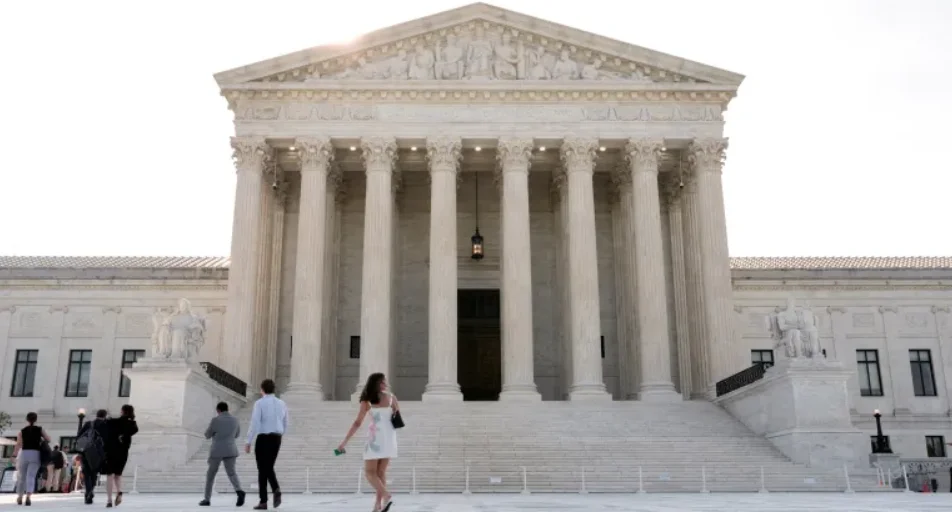
The US Supreme Court has cleared the way for the Trump administration to move forward with parts of its plan to restrict mail-in voting ahead of the November 2026 midterm elections.
The court ruled 6-3 on Monday, lifting one lower-court injunction that had prevented the administration from implementing parts of President Donald Trump’s executive order. However, the ruling did not finally determine whether the order itself is lawful, and a separate court order continues to block a key part of the plan.
What Does Trump’s Order Seek to Change?
Trump’s March executive order directs federal agencies to create lists of eligible US citizens and share them with states. It also calls for changes to how mail-in ballots are handled by the US Postal Service (USPS).
The order seeks to require states and localities to use new federal markings and barcodes on ballot envelopes and restrict USPS from transmitting mail ballots from voters who are not enrolled on the relevant state lists.
Why Did the Supreme Court Allow It to Proceed?
The Supreme Court's conservative majority did not rule on the ultimate legality of Trump's voting order.
Instead, the justices said the states challenging the policy had brought their case too early because the federal government had not yet taken concrete actions causing the type of harm necessary to establish legal standing. This leaves the door open for further lawsuits as implementation moves forward.
Another Court Block Remains
Despite Monday's decision, Trump's entire mail-voting plan is not yet fully cleared to take effect.
A separate nationwide injunction issued by a federal judge on August 11 continues to block the USPS from enforcing key parts of the administration's new requirements. This means additional court battles are likely before the rules can be fully implemented.
Democrats and Voting Rights Groups Object
Democratic-led states and voting-rights advocates have strongly opposed the administration's plans.
They argue that the federal government is attempting to interfere with election procedures traditionally administered by individual states and warn that rapid changes to mail voting could create confusion and potentially prevent eligible voters from casting ballots.
The three liberal Supreme Court justices dissented. Justice Sonia Sotomayor argued that states should not have to wait until the rules are fully enforced before challenging them.
Midterm Elections Add Urgency
The timing of the ruling is particularly significant because the November 2026 midterm elections are approaching quickly.
Election officials face a limited window to make major changes to mail-ballot systems. Some states are expected to begin sending ballots to military and overseas voters in early September, adding pressure to the ongoing legal proceedings.
Political Impact
Mail-in voting has become a major political issue in the United States. Trump has repeatedly criticized the practice and sought tighter controls, while Democrats and voting-rights groups argue that restrictions could make voting more difficult for eligible voters.
With Republicans holding narrow majorities in Congress, the outcome of the continuing legal battle could have important implications for the 2026 midterm elections.