



India and the United States have taken another significant step in their growing defence partnership, with New Delhi signing an agreement to procure US-made Javelin anti-tank guided missile systems for the Indian Army.
The agreement marks a further expansion of defence cooperation between the two countries and could eventually open the door to joint production by Indian and US defence companies.
US Ambassador to India Sergio Gor welcomed the agreement and described it as an important milestone in the bilateral defence relationship.
The United States said the Indian Army has signed a Letter of Offer and Acceptance (LOA) for the acquisition of the Javelin anti-tank guided missile system through the US Foreign Military Sales process.
Gor said the agreement demonstrated the depth of US support for the Indian Army and created new opportunities for the two countries' defence industries to work together.
According to the US readout, the agreement could also lead to discussions on mutually beneficial co-production and other opportunities aimed at strengthening the defence industrial bases of both countries.
The exact number of Javelin systems India will receive under the current agreement and the overall value of the procurement have not yet been officially disclosed.
The development follows an earlier US approval related to a potential Javelin sale to India.
In November 2025, the United States approved a potential sale involving up to 100 Javelin systems and 216 Excalibur guided artillery projectiles, with an estimated value of about $93 million. The current signed agreement may represent the next stage of that broader procurement process, although its final quantity and value have not been publicly specified.
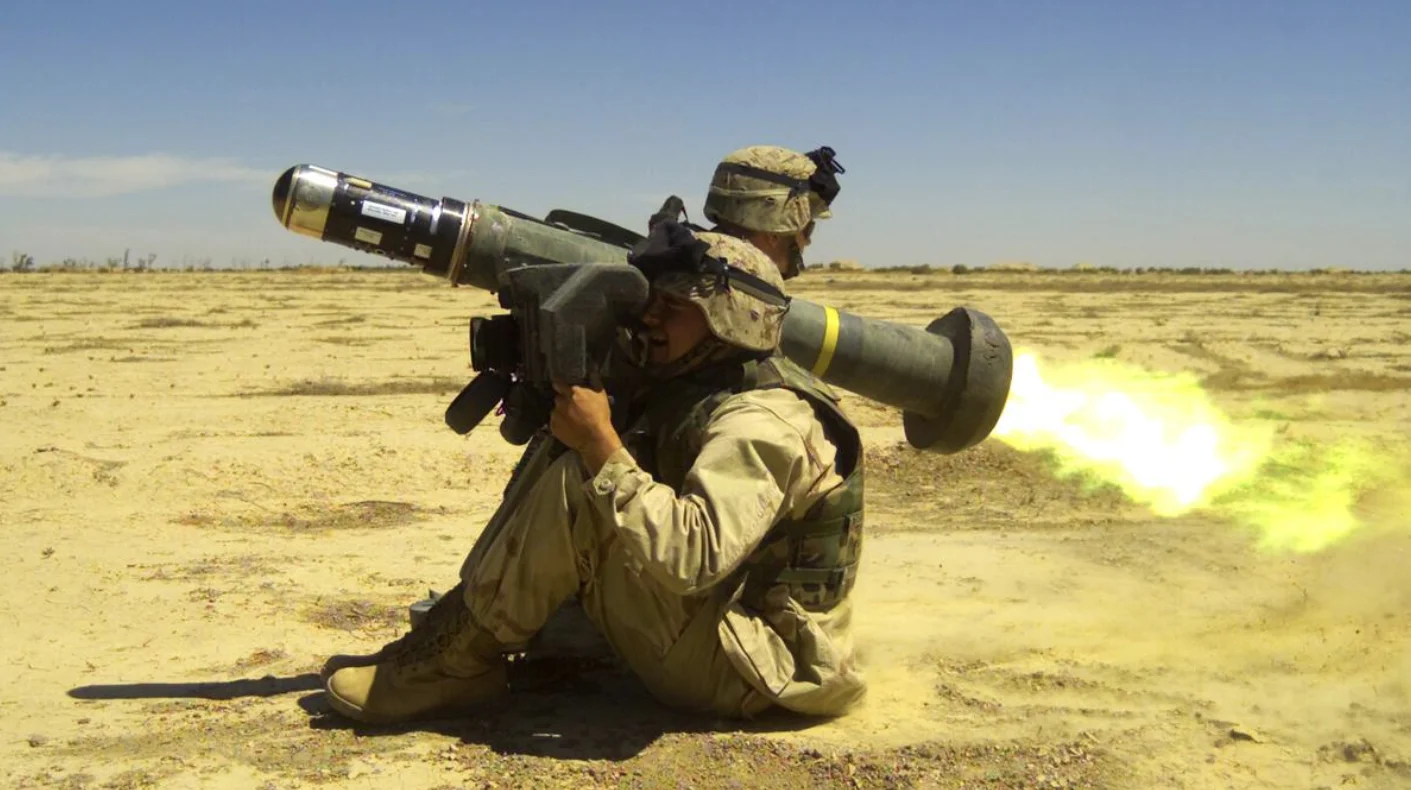
The Javelin is an advanced, medium-range fire-and-forget anti-tank guided missile system.
It is used by the US Army, US Marine Corps and several international customers and is designed to engage armoured vehicles and fortified targets.
One of the system's main characteristics is its fire-and-forget capability.
Once the missile has been launched after the target is acquired, the system is designed to guide the missile towards the target without requiring the operator to continuously control its flight.
This allows personnel to reposition after firing rather than remaining exposed while guiding the weapon.
The Javelin system is produced by the Javelin Joint Venture, a partnership involving US defence companies RTX and Lockheed Martin.
For India, the acquisition comes as the armed forces continue to modernise their equipment and strengthen capabilities against a range of battlefield threats.
The system would add another modern anti-armour capability to the Indian Army's inventory.
But the significance of the agreement extends beyond the acquisition of the missiles themselves.
The United States has specifically highlighted the possibility of co-production between Indian and American defence industries.
That could eventually result in greater industrial cooperation, technology partnerships and manufacturing opportunities in India.
Such cooperation would also fit India's broader effort to increase domestic defence manufacturing.
New Delhi has increasingly sought to move beyond simply importing military equipment and instead build greater manufacturing capacity within the country.
Joint production arrangements with foreign defence companies can contribute to that objective.
For US defence companies, India also represents one of the world's largest and most strategically important defence markets.
The two countries have already developed a substantial defence relationship over the past two decades.
India operates several major US-origin defence platforms, including Apache and Chinook helicopters, C-17 and C-130J transport aircraft, P-8I maritime patrol aircraft and M777 howitzers.
The Javelin agreement therefore builds on an existing defence relationship rather than creating a completely new partnership.
The two countries also established a framework for a major defence partnership last year focused on improving interoperability across land, sea, air, space and cyberspace.
The latest agreement adds another layer to that cooperation.
For Washington, closer defence ties with India are part of a broader strategy of strengthening relationships with major partners in the Indo-Pacific.
For New Delhi, access to advanced defence systems and closer cooperation with the US defence industry can support military modernisation.
The agreement also reflects the increasingly industrial nature of India-US defence cooperation.
In the past, the relationship was often discussed mainly in terms of equipment purchases.
More recently, both governments have placed greater emphasis on technology, manufacturing and industrial cooperation.
The possibility of Javelin co-production is therefore particularly significant.
If implemented, it could allow Indian companies to become more closely involved in the supply chain associated with the system.
It could also create opportunities for skills development, manufacturing investment and longer-term industrial cooperation.
However, the details of any future co-production arrangement have not yet been announced.
The immediate agreement concerns the procurement of the Javelin system.
Further negotiations would be needed to determine how any joint manufacturing programme might be structured.
The acquisition also comes amid wider expansion in India-US defence cooperation.
Washington has said that the two countries are broadening cooperation not only in defence but also in areas such as civil nuclear energy, artificial intelligence and emerging technologies.
That broader relationship provides a strategic context for the latest Javelin agreement.
Defence remains one of the areas where India and the US have developed particularly close institutional ties.
Regular military exercises, defence sales and industrial partnerships have increased the level of interaction between the two countries' armed forces and defence companies.
The Javelin agreement could deepen that relationship further.
For the Indian Army, the system offers an advanced capability designed specifically for engaging armoured threats.
For the United States, the agreement strengthens the role of American defence companies in India's growing military market.
The potential for joint production gives the agreement an additional long-term dimension.
The US ambassador has described defence engagement between the two countries as reaching very high levels, while the US government has said the agreement creates opportunities to strengthen the defence industrial bases of both countries.
The next steps will be closely watched.
Details about the number of systems, delivery schedules and total procurement value are expected to become clearer as the agreement moves forward.
Any future co-production arrangement would also require separate discussions between the governments and participating defence companies.
For now, the signing of the LOA represents the key development.
It confirms that India has formally moved ahead with the procurement of the Javelin anti-tank missile system through the US Foreign Military Sales mechanism.
The agreement is significant not only because of the weapon system involved but also because of what it could mean for the future of India-US defence cooperation.
If the two sides move towards co-production, the relationship could increasingly shift from a buyer-seller model towards a more integrated defence industrial partnership.
That would align with India's push for greater domestic defence manufacturing while giving US companies a larger role in India's defence ecosystem.
The Javelin deal therefore represents another step in a relationship that is becoming broader and more complex.
For India, it adds a modern anti-tank capability. For the United States, it strengthens a key defence partnership. And for both countries, it could open a new chapter of industrial cooperation.
The precise scale of the procurement and the details of any future joint-production plans will determine how significant the agreement ultimately becomes.