



An Ayurvedic herbal tea is an infusion of herbs and spices traditionally selected according to digestion, symptoms and dosha balance. Ginger, fennel, cumin and coriander are commonly used in Ayurveda for digestive comfort. The best tea for digestion depends on whether you experience bloating, heaviness, acidity or irregular digestion and when you drink it.
TL;DR – What Should You Know About Ayurvedic Herbal Tea?
- Herbal Tea Is Different From Green or Black Tea: Ayurvedic herbal teas are usually made from herbs, roots, seeds, flowers, or spices, not Camellia sinensis.
- Digestive Teas Use Traditional Herbs: A herbal tea for bloating may include ginger, fennel, cumin, or coriander to support digestive comfort.
- Green Tea Contains Caffeine: Green tea is not the same as herbal tea because it comes from Camellia sinensis and naturally contains caffeine.
- Tea Timing Matters: Tea after meals may suit some people, but tannin-rich teas should be kept away from iron-rich meals or iron supplements if iron absorption is a concern.
- Herbal Tea Is Supportive, Not Magical: Herbal detox tea should be understood as a wellness term, not a literal toxin-removal claim, and herbs may cause side effects or interact with medicines.
What Is Ayurvedic Herbal Tea?
Ayurvedic herbal tea is a hot-water infusion prepared from one or more herbs, spices, roots, seeds or flowers traditionally used in Ayurveda.
Unlike green, black, white and oolong tea, herbal teas do not necessarily come from the Camellia sinensis plant.
Common Ayurvedic tea ingredients include:
- ginger
- fennel
- cumin
- coriander
- cinnamon
- cardamom
- Tulsi
- turmeric
- rose
- liquorice in selected formulations
Ayurveda does not traditionally view every herbal tea as suitable for everybody.Selection may depend on Prakriti ,Vikriti ,Agni (digestive capacity),season,symptoms,time of day
This is why the same warming ginger infusion that feels comfortable to one person may feel too heating to another.
How Does Ayurveda Explain Digestion and Herbal Tea?
Ayurveda places Agni, or digestive and metabolic capacity, at the centre of digestive wellbeing.
Traditional Ayurvedic theory describes several digestive patterns.
|
Ayurvedic digestion pattern |
Traditional characteristics |
Tea approach traditionally considered |
|
Vishama Agni |
Irregular appetite, gas, bloating or constipation |
Warming and settling herbs such as ginger, cumin or fennel |
|
Tikshna Agni |
Strong hunger, heat, burning or acidity |
Gentler or cooling herbs such as fennel and coriander |
|
Mandagni |
Heaviness, sluggish digestion or low appetite |
Warming spices such as ginger, cinnamon or cardamom |
|
Samagni |
Balanced appetite and comfortable digestion |
Simple balanced herbal infusions as desired |
These are traditional Ayurvedic classifications rather than modern medical diagnoses.Persistent bloating, reflux, abdominal pain or changes in bowel habits should not automatically be attributed to an Agni imbalance.
Which Herbal Tea Is Best for Bloating?
If you are looking for a herbal tea for bloating, there is no single tea that is best for everyone.The right choice depends partly on why you feel bloated.
Can Ginger Tea Help With Bloating?
Ginger has traditionally been used for indigestion and gastrointestinal discomfort.
Modern research has studied ginger more extensively for nausea and vomiting than specifically for bloating. NCCIH notes that ginger has a long history of use for indigestion and gastrointestinal discomfort, but it can also cause abdominal discomfort, heartburn and diarrhoea in some people.
Ayurveda traditionally considers ginger warming and useful where digestion feels sluggish or Vata/Kapha qualities predominate.
It may be less comfortable for someone who already experiences significant burning or heartburn.
Turmeric Ginger Tea: Ayurvedic Support for Warmth & Balance
A warming Ayurvedic infusion crafted with turmeric and ginger to support digestion, comfort, and everyday wellness
Buy Now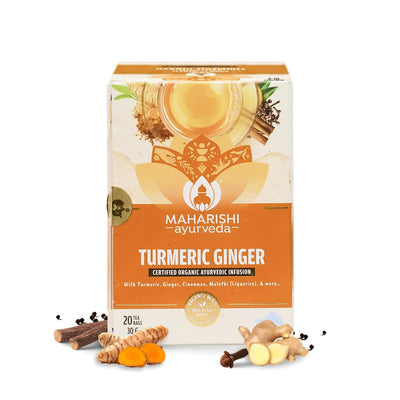
Can Fennel Tea Help After a Heavy Meal?
Fennel is traditionally used in Indian and Ayurvedic food culture after meals.
Its mild, aromatic character makes it a common ingredient in digestive infusions, particularly when there is a feeling of heaviness or gas.Fennel may also be paired with cumin and coriander.
What Is CCF Tea?
CCF tea is made from:
- Cumin
- Coriander
- Fennel
It is one of the simplest Ayurvedic-style digestive infusions.
The three spices are traditionally used together because they provide a gentler digestive blend than relying entirely on intensely warming spices.CCF tea may be consumed around meals according to individual tolerance.
Check out the complete guide to CCF Tea--->
Is Ginger Tea Good for an Upset Stomach?
Ginger tea for stomach upset is popular because ginger has a long history of traditional digestive use.
Research suggests ginger may help with some forms of nausea, particularly pregnancy-associated nausea and vomiting, although much of the research has examined supplements rather than cups of ginger tea.
For mild digestive discomfort, a simple ginger infusion can be made by steeping sliced fresh ginger in hot water.However, ginger is not automatically soothing for every stomach.
Possible side effects include:
- heartburn
- abdominal discomfort
- diarrhoea
- mouth or throat irritation
If you already have frequent reflux or burning acidity, a strong ginger tea may aggravate rather than soothe your symptoms.
Tulsi Lemon Ginger Tea: Ayurvedic Support for Immunity & Digestion
A refreshing Ayurvedic infusion crafted with Tulsi, lemon, and ginger to support digestion, immunity, and everyday wellness
Buy Now
Is Ginger Tea Good for Gastric Problems or Stomach Pain?
“Gastric” is a broad term and may refer to gas, acidity, indigestion, bloating or stomach pain.That means ginger tea for gastric problems should not be treated as a universal remedy.
For mild nausea or digestive discomfort, ginger may be useful for some people.But stomach pain can have many causes, including:
- gastritis
- reflux
- infection
- ulcers
- gallbladder problems
- food intolerance
- bowel conditions
Persistent, severe or recurrent pain requires proper evaluation.A cup of tea should never be used to mask unexplained abdominal pain.
Is Green Tea Good for Digestion?
Green tea is often associated with wellness, but green tea and digestion is more nuanced than simply saying it “improves digestion.”
Green tea comes from the Camellia sinensis plant and contains caffeine and polyphenols. Unlike most herbal infusions, it is a true tea rather than an herbal tea.
Green tea consumed as a beverage is generally considered safe for adults in moderate amounts, but it contains caffeine and may not suit everyone.If you tolerate it well, green tea can form part of a normal diet.
If it causes:
- acidity
- stomach discomfort
- restlessness
- palpitations
- disturbed sleep
then reducing the amount or changing the timing may make more sense than forcing yourself to drink it for perceived digestive benefits.
Tulsi Green Tea: Ayurvedic Support for Calm & Refreshment
A refreshing Ayurvedic infusion crafted with Tulsi and green tea to support daily balance, clarity, and everyday wellness
Buy Now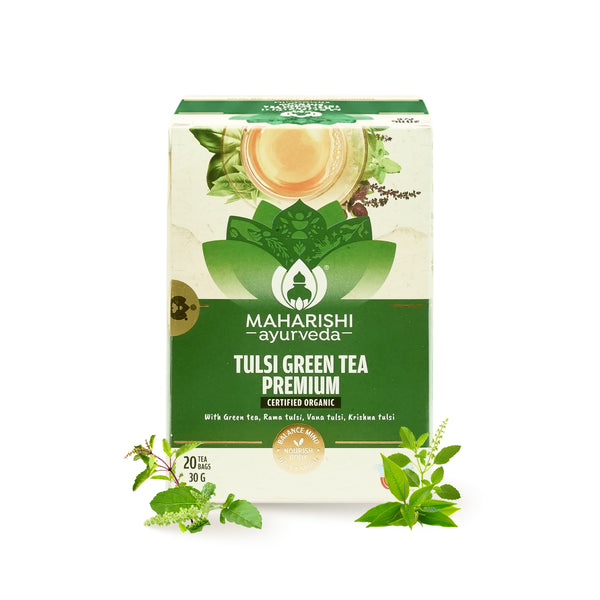
Should You Drink Tea After a Meal?
Drinking tea after a meal depends on which tea you mean.A caffeine-free herbal infusion such as fennel or CCF tea is different from black or green tea.
Tannin- and polyphenol-containing tea can reduce absorption of non-haem iron from food. The British Dietetic Association therefore advises people concerned about iron intake to avoid tea and coffee around iron-rich meals.
The NHS similarly recommends leaving approximately a two-hour gap between tea or coffee and iron supplements or iron-rich foods when iron deficiency is a concern.
How Long After a Meal Should You Drink Tea?
There is no universal tea digestion time that applies to every beverage and every person.
If you have iron-deficiency anaemia or take iron supplements, pay particular attention to the timing of green and black tea.
|
Tea type |
Timing to consider |
|
Caffeine-free digestive herbal infusion |
Can often be taken after a meal if comfortable |
|
Green tea |
Better between meals for people sensitive to caffeine or concerned about iron |
|
Black tea |
Consider taking away from iron-rich meals |
|
Ginger tea |
Before or after food depending on tolerance |
|
Bedtime herbal tea |
Choose caffeine-free preparations |
Which Ayurvedic Tea Is Best for Different Doshas?
Ayurveda traditionally adjusts herbs according to constitution and current imbalance.
Which Herbal Tea May Suit Vata?
Vata is traditionally associated with dryness, coldness and irregularity.
Warm aromatic infusions may include:
- ginger
- fennel
- cinnamon
- cardamom
- cumin
- The goal is traditionally to provide warmth and regularity.
Vata Calm Tea: Ayurvedic Support for Calm & Balance
A soothing Ayurvedic infusion crafted to support Vata balance, relaxation, and everyday wellness
Buy Now
Which Herbal Tea May Suit Pitta?
Pitta is associated with heat and intensity.Gentler infusions may use:
- fennel
- coriander
- rose
- cardamom
- Very strong ginger, chilli-like heating spices or excessive caffeine may not suit someone who already experiences heat or acidity.
Pitta Soothe Tea: Ayurvedic Support for Cooling & Balance
A soothing Ayurvedic infusion crafted to support Pitta balance, inner calm, and everyday wellness
Buy Now
Which Herbal Tea May Suit Kapha?
Kapha is traditionally associated with heaviness and sluggishness.More warming aromatic ingredients may include:
- ginger
- cinnamon
- clove
- cardamom
- Tulsi
Kapha Energise Tea: Ayurvedic Support for Energy & Balance
An uplifting Ayurvedic infusion crafted to support Kapha balance, lightness, vitality, and everyday wellness
Buy Now
Can Herbal Tea Help With Diarrhoea?
Tea should not be the primary treatment for diarrhoea.The main concern during diarrhoea is loss of water and electrolytes.
WHO recommends oral rehydration solution (ORS) to replace the fluid and electrolytes lost during diarrhoea. Persistent diarrhoea, blood in the stool or signs of dehydration require medical attention.
A mild herbal beverage may sometimes be consumed alongside appropriate hydration if it is tolerated, but tea for diarrhoea should never replace ORS.
Be particularly careful with strong ginger preparations because ginger itself can cause diarrhoea in some people.
What Is Herbal Detox Tea?
The phrase herbal detox tea is widely used, but it needs careful interpretation.
Your liver, kidneys, lungs and digestive system continuously process and remove metabolic waste.A tea does not need to “flush toxins” from the body to be useful.
A more responsible way to think about herbal detox tea is as an infusion that may support:
- hydration
- digestive comfort
- normal bowel habits
- a lighter alternative to sugary drinks
Ayurveda traditionally uses the concept of Ama to describe the consequences of incomplete digestion and impaired metabolic processing.
That is an Ayurvedic framework, not the same thing as scientifically measurable environmental or metabolic toxins.
Therefore, claims that a tea rapidly “cleanses toxins” or detoxifies specific organs should be treated cautiously.
Pure Cleanse Tea: Ayurvedic Support for Detox & Balance
A purifying Ayurvedic herbal infusion crafted to support cleansing, digestion, lightness, and everyday wellness
Buy Now
Can Triphala Be Used as a Herbal Tea?
Triphala is a traditional Ayurvedic combination of:
- Amalaki
- Haritaki
- Bibhitaki
It is widely used in Ayurveda for digestive and bowel support.
Triphala can be prepared in different forms, including powder mixed or infused with warm water.However, Triphala is not simply an everyday beverage for everyone.The dose, form and suitability can vary according to the person and reason for using it.
If you are taking medicines, pregnant, breastfeeding or managing a chronic health condition, professional guidance is preferable before regularly using concentrated herbal preparations.
Triphala Powder: Ayurvedic Support for Digestion & Gut Balance
A traditional Ayurvedic blend of three fruits crafted to support digestion, bowel regularity, and everyday gut wellness
Buy Now
Can Ayurvedic Herbal Tea Support Energy?
Herbal tea does not provide energy in the same way calories from food do.
Caffeinated beverages such as green or black tea can temporarily increase alertness because they contain caffeine.Most Ayurvedic herbal infusions are naturally caffeine-free unless the blend also contains green or black tea.
From an Ayurvedic perspective, herbs such as ginger and cinnamon are traditionally used when digestion feels heavy or sluggish.
That may make a warm infusion feel refreshing after a meal, but it should not be described as producing “sustained energy” or treating unexplained fatigue.
Persistent low energy deserves investigation into sleep, nutrition, stress and possible health causes.
Can Ayurvedic Herbal Tea Support Women's Daily Wellness?
Certain herbs used in Ayurvedic teas such as Shatavari, rose and fennel have longstanding traditional associations with women's wellness.
However, a tea should not be presented as automatically “balancing hormones.”Hormonal symptoms can arise from many conditions, including:
- PCOS
- thyroid disorders
- perimenopause
- menopause
- medication effects
An herbal tea can be part of a broader wellness routine, but persistent menstrual or hormonal symptoms need appropriate assessment.
When Is the Best Time to Drink Ayurvedic Herbal Tea?
The best time depends on the ingredients and why you are drinking the tea.There is no rule that every herbal tea is best consumed on an empty stomach.Some herbs may actually cause discomfort when taken without food.Choose the timing according to the blend and your own tolerance.
Can Herbal Tea Have Side Effects?
Yes.The idea that herbal tea has no side effects because it is natural is incorrect.Potential issues depend on the ingredients and dose.
For example:
- ginger may cause heartburn, abdominal discomfort or diarrhoea
- green tea contains caffeine
- concentrated green tea products can interact with medicines
- some herbs may be unsuitable during pregnancy
- herbs can interact with prescription medicines
The stronger and more concentrated the herbal preparation, the more important appropriate guidance becomes.
How Do You Choose the Best Tea for Digestion?
Start with the digestive problem rather than the trendiest ingredient.The best tea is the one that matches the problem and is well tolerated, not necessarily the tea with the longest ingredient list.
|
What you experience |
Tea approach to consider |
|
Bloating and gas |
Gentle ginger, fennel or CCF-style infusion |
|
Heavy feeling after meals |
Warming digestive spices according to tolerance |
|
Acidity or burning |
Avoid overly strong ginger or caffeinated tea if it worsens symptoms |
|
Mild nausea |
Ginger may help some types of nausea |
|
Iron deficiency |
Keep green or black tea away from iron-rich meals |
|
Diarrhoea |
Prioritise ORS rather than herbal tea |
|
Sensitive stomach |
Start with a mild, simple infusion rather than complex blends |
What Is the Key Takeaway About Ayurvedic Herbal Tea?
An Ayurvedic herbal tea can be a simple addition to a digestive wellness routine, particularly when the ingredients are selected according to your symptoms and tolerance.
For bloating or sluggish digestion, Ayurveda traditionally uses ingredients such as ginger, fennel, cumin and coriander. Green tea is a different type of beverage and contains caffeine, while so-called detox teas should not be treated as quick cleanses.
Most importantly, tea should support not replace he fundamentals of digestive health:
- balanced meals
- adequate hydration
- regular eating patterns
- appropriate movement
- sufficient sleep
- medical evaluation when digestive symptoms persist
Ayurveda adds a personalised layer by considering Agni, dosha balance and individual constitution, but there is no single herbal tea that is right for every digestive problem.
Explore Maharishi Ayurveda Teas & Infusions: Discover Ayurvedic tea blends for everyday digestive and wellness routines.